Artificial Divinity
Junior Worldbuilding Project (Fall 2025)
Artificial Divinity is a world bible for a fictional sci-fi planet based around three cultures that each worship one of the three AI gods: The God of Agriculture, The God of Knowledge, or The God of Weather. Each culture has a society, factions, unique flora and fauna, and cities that were built around the god they worship. This world has a full history, ranging from the creation of the AI gods to the modern era, including a major global conflict that destroyed an entire civilization.
The world bible is meant to be a highly descriptive document about the world of Galeph-V and its inhabitants, to be used by others as a reference for maintaining the consistency of the world when creating it. At the start, there was a significant amount of time put into concepting ideas for what kind of world I was going to create that presented a lot of challenges for me specifically to overcome. Artificial Divinity then went through several iterations before the final version, as more information was added to make the world feel more realistic, more unique, and to rectify any conflicts in the bible that arose with the addition of new information.
Concepting Phase
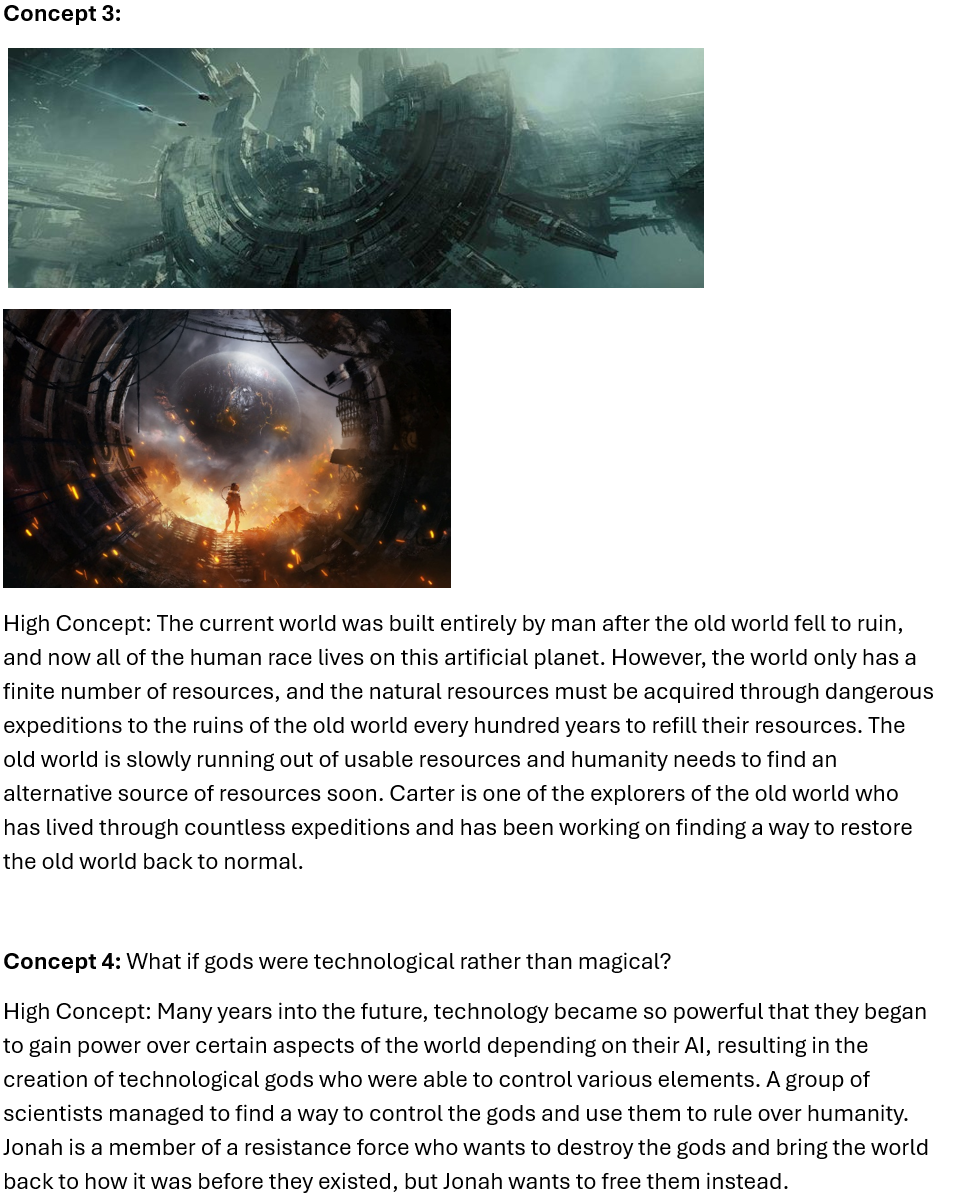
The initial phase of coming up with ideas for a world was one of the most challenging aspects of this project for me. I’ve always struggled to come up with a starting idea, and I was tasked with creating at least 15 different ideas. In doing this, I learned many new ways to create world ideas, including searching for reference images, combining random cards with world aspects, and coming up with basic story ideas that would take place in that world.
Using these skills, I was able to come up with many different world concepts in a short amount of time to see which ideas stuck and would then be able to show off all of these ideas to my peers to determine which ideas people found most interesting. I was then able to take that momentum to help kickstart the ideas for the world that I decided to make, and got me over that initial hurdle of creating an idea from scratch.
The Iteration Process
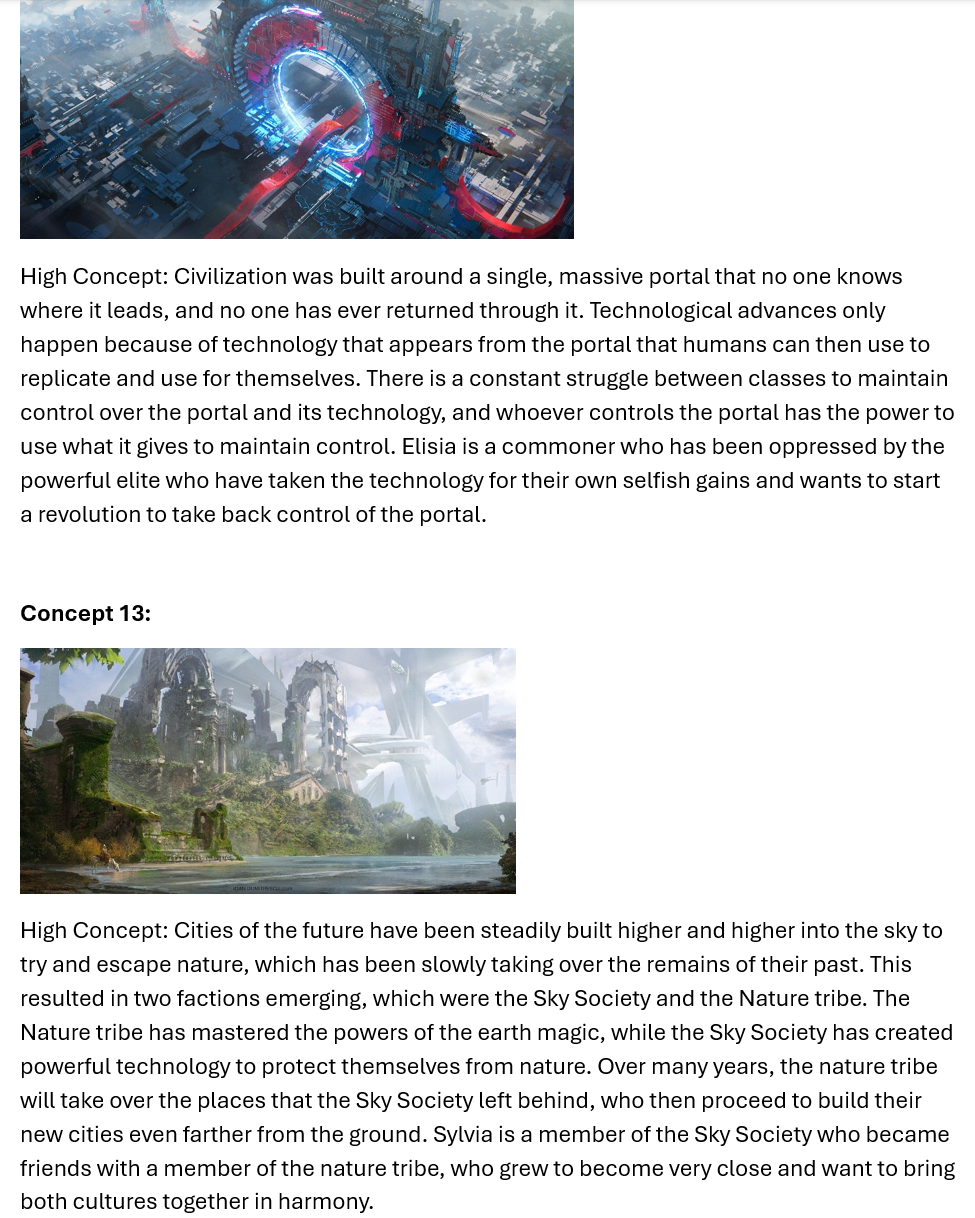
My world bible was slowly built up over the course of a semester, and we would have weekly group discussions about each other’s worlds. This led to frequent, helpful feedback from my peers that helped me find small details I'd overlooked or inconsistencies in the information I already had. I then had the chance to use this feedback to improve both the section I had already written and the future sections I would write. Past information would be frequently updated with the newer and more important information that would be added to the world bible.
Overall, this feedback would lead to the world bible feeling much more cohesive and make the information about the world, especially those pertaining to the different cultures, much more detailed and realistic. I was able to avoid falling into the traps of making things fit into basic categories and let my ideas feel more unique.
Full World Bible
If you are interested in the whole World Bible or want to know more about the world of Galeph-V, please feel free to click below and see it for yourself!